CJ & Brody’s Story
A Limb-Girdle Muscular Dystrophy (LGMD) community interview with Craig, Jodi, Brody and CJ Norton from Fairfax, VA
When meeting Brody, 20 and CJ, 18, one immediately recognizes young men eager to fit in and excel at life. They are smart, well-mannered teenagers who approach the world with a positive outlook and a strong support system of friends and a loving family. The brothers’ bond runs deeper than most siblings; they carry the burden of an ultra-rare genetic disorder, Limb-Girdle Muscular Dystrophy (LGMD) 2I/R9.
Craig and Jodi, when did you first notice something was off?
“When Brody was 15 months old, he had a virus that wouldn’t go away. Each day he became weaker. When we noticed he had a floppy neck, we took him to our local children’s hospital. We saw a neurologist who determined that he had elevated CPK levels and asked if muscular dystrophy ran in our family; it does not. Brody spent the next four nights in the ICU where they took a muscle biopsy, which came back with the diagnosis of LGMD2I.” Jodi was pregnant with CJ at the time but could not fathom they would have two sons with the same ultra-rare condition. The risk for two carrier parents to pass the gene and, therefore, have an affected child, is 25% with each pregnancy.
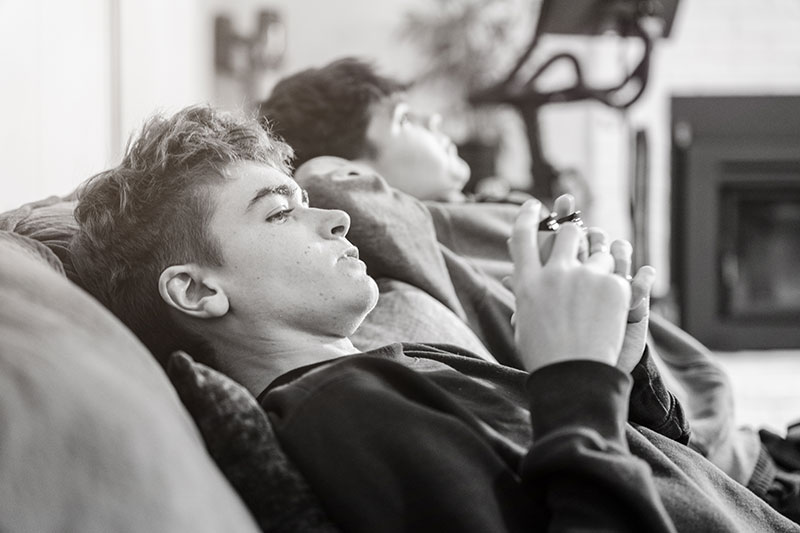
How has LGMD personally affected your family?
“Life has continued to become more challenging for Brody and CJ as muscle deterioration takes place in their shoulders, pelvis, and upper arms and legs. Despite their struggle to walk, participate in sports or perform normal activities as their teenaged peers do, Brody and CJ have a group of loyal friends who never shy away from lending a helping hand and filling in as secondary caretakers. On a daily basis, we worry about what’s next with each and every step, and the anxiety that comes with that is overwhelming. They’ve handled it with a lot of grace, but it’s difficult. It was hard enough being an able-bodied teenager without LGMD.”
What do you wish people knew about living with LGMD?
“At a rather young age, Brody and CJ noticed they could not run fast, and as time passed, their symptoms have progressed to the point where running is no longer possible, and both just hope to make it from class to class each school day. CJ often uses a scooter to get around while Brody still manages to walk on his own, though impaired. The unfortunate solution is mobility enhancement – scooters and wheelchairs. Because of LGMD, they are not capable of doing things like getting out of bed, stepping up a curb or making it up a flight of stairs. Anything to intercede in their progression is all we can hope and pray for.”
How important is it to find new treatments for LGMD?
Brody and CJ could not be more transparent about the challenges that LGMD has brought to their lives. Brody says with remorse, “Living with LGMD is challenging, to say the least. I watch all my friends do the things I can’t, and it makes me wonder why not me?” CJ adds, “I wish I could wrestle or do one sport. I feel I’m missing out. I want to be able to go somewhere without having to worry what I’ll do if I fall.” Yet even as Brody and CJ face the daunting task of getting out of bed on their own each day without a future treatment, let alone a cure, they hold their heads high with hope and optimism.
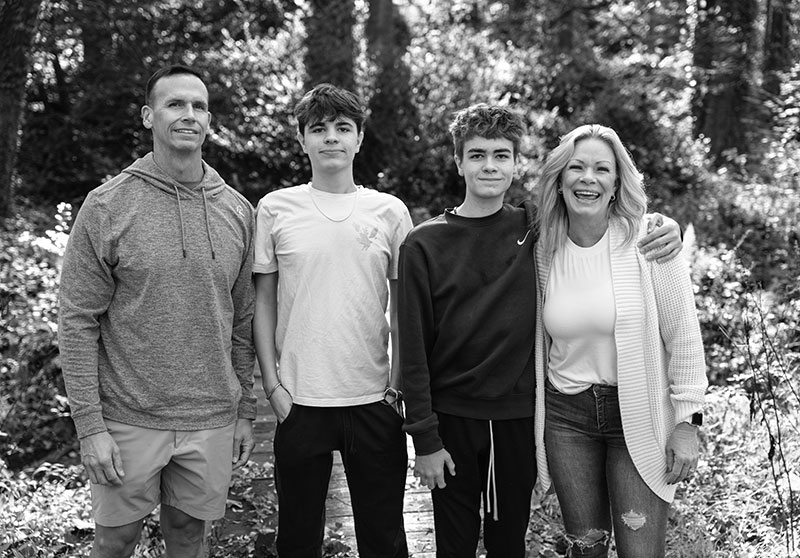
What are your hopes for the future?
“We know the path ahead will not be easy. As parents, we must endure watching the deterioration of the boys’ physical abilities unless a treatment is discovered. The opportunities for their lives are closing when, at this stage, they should be widening. We put a lot of eggs in this basket of hope. To those working on a treatment for LGMD, time is of the essence. We have been waiting for years. We keep hearing something is on the horizon, but we are desperate for anything that might improve their daily lives. Given the level of anxiety we feel and experience each day, I would never sleep through the night without the hope that a cure is around the corner!”
For more information about LGMD, visit the CureLGMD2iFoundation https://curelgmd2i.com/, the LGMD Awareness Foundation https://www.lgmd-info.org/, or the SPEAK Foundation https://thespeakfoundation.com/
Patient experiences and perspectives are personal and do not reflect clinical outcomes or the effectiveness of any investigational therapy.