Darlene’s Story
A CONGESTIVE HEART FAILURE (CHF) community interview with Darlene Anita Scott, Richmond, VA
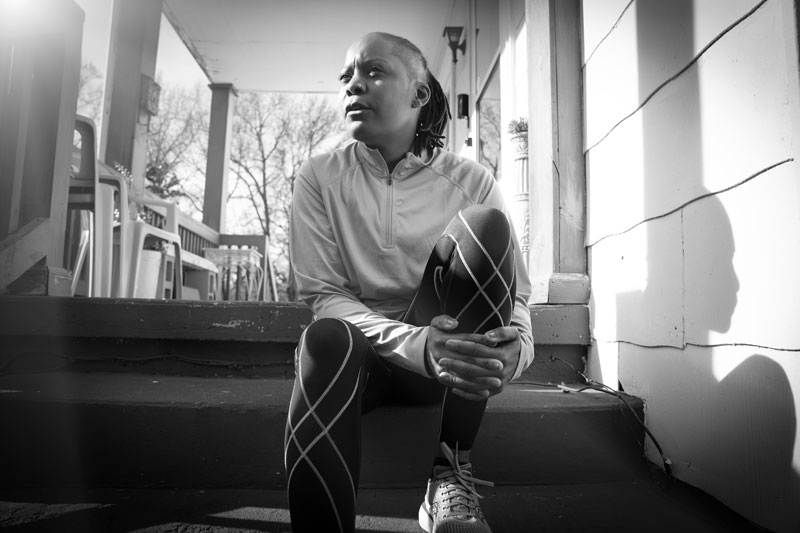
The day before Darlene Anita Scott was diagnosed with congestive heart failure, she ran ten miles. A whole foods vegan training for her seventh marathon, she was considered healthy by most metrics. Since her surprise diagnosis, Darlene has committed to maintaining a purposeful life that includes a little less running and a lot more rest.
When did you first notice something was off?
Symptoms of heart failure may be subtle, and many believe that being overly tired with an inability to manage a lot of exertion may be a result of a lack of sleep or too much work. I was consistently tired and found myself with breathing difficulties, congestion, and leg swelling. As an athlete, I brushed it off for as long as I could, but eventually I just knew something was not right, so I was able to seek treatment while still in the early stages of the disease. I remember when my doctor delivered the news of my diagnosis and hearing the words “heart failure.” I was forty-one; that had devastating implications. I was shocked because I thought I was healthy, so my other reaction was fear. I always associated heart failure with death, but I can still run, I just can’t run as far nor as fast as I once did.
How has CHF personally affected you and your family?
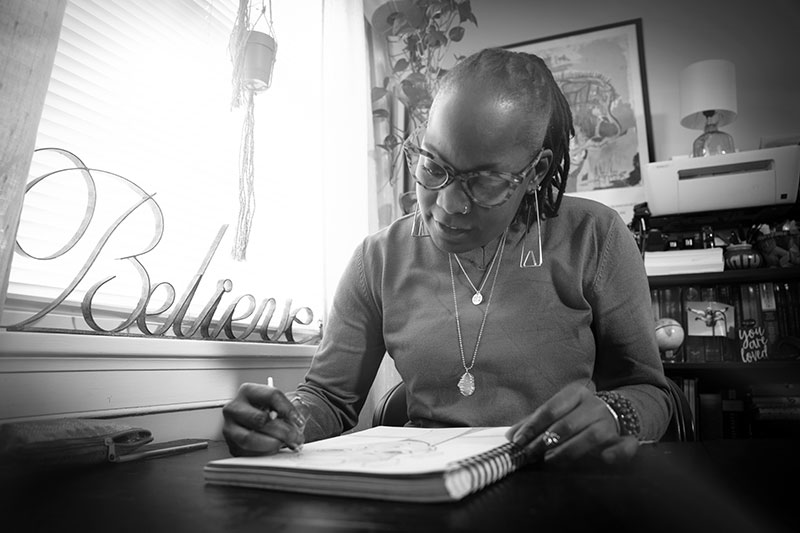
Despite the challenges that CHF presents, I still exercise, determined to keep up a healthy pace in my long-distance run against CHF. I make it a priority in life and express myself through my passion for the visual arts and prose; my attempt to convey optimism and courage. I have an ICD implant (an internal defibrillator), a pacemaker, and take a myriad of medications to manage my CHF symptoms. As my symptoms progress, I learn how to adjust. I still teach daily as an English professor, but my routine has changed, and I require more rest, but it does not stop me from being the best version of myself.
What do you wish people knew about living with CHF?
The emotional impact, like the low hanging cloud over my head that comes and goes at will. I’ve had to make various lifestyle changes and, in addition to the implanted devices, a surgical procedure to optimize device performance and a daily regimen of medications, I’ve enlisted the support of a therapist. The advice I receive from that therapist and outreach to others who have CHF or similar conditions have been lifesavers.
How important is it to find new treatments for CHF?
Without a cure for CHF, the progression of the disease is different for each patient with varying forms of treatment to manage symptoms. Life expectancy can vary depending on disease severity and, for some patients, the only recourse is a heart transplant. Regardless of what phase of CHF a patient is experiencing, the continued weakening of the heart and the ensuing life altering symptoms are unavoidable. CHF is a disease that literally takes your breath away. My advice for others with CHF is the same for researchers working on better treatments and ultimately a cure for heart failure… Just keep going.
What are your hopes for the future?
I’ve kept busy as a writer, visual artist and university professor for the past 20 years. My hope is that with the rapid advancements in science, I (and the rest of the CHF community) will have at least another twenty more!
For more information about CHF, visit WomenHeart https://www.womenheart.org/, the Heart Failure Society of America (HFSA) or the American Heart Association.
Patient experiences and perspectives are personal and do not reflect clinical outcomes or the effectiveness of any investigational therapy.