Paul’s Story
A Parkinson’s Community Interview with Paul and Carol Ehman, Pittsburgh, PA
Paul, when did you first notice something was off?
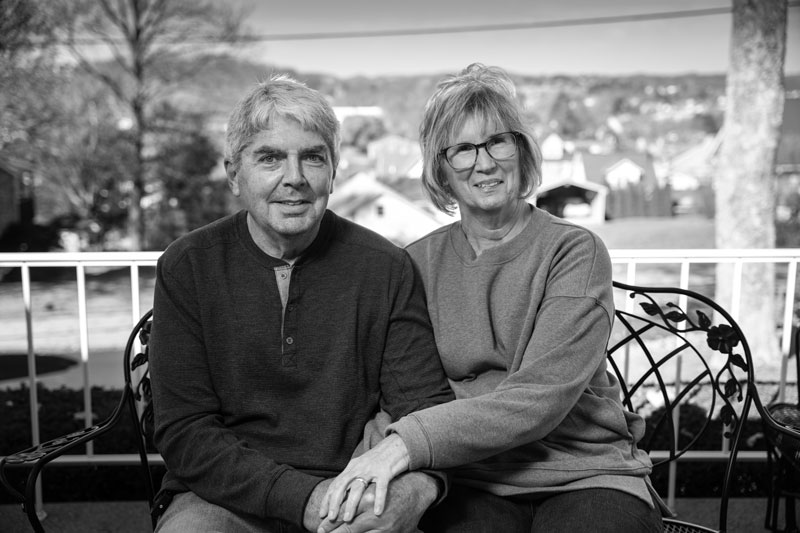
Carol and I were driving home from Florida to our quiet town of Derry, Pennsylvania when my thumb began trembling uncontrollably as I held on to the steering wheel. It was on that drive that we knew something wasn’t right, and we needed to schedule a visit to the doctor. As Carol recalls, Paul called me from the doctor’s parking lot to tell me he was diagnosed with Parkinson’s disease; we just couldn’t believe it. We came home and researched all the information we could find, and that led us to a neurologist, a movement specialist. After that visit in 2018, we transformed our worst fears into a plan for managing symptoms and putting energy into embracing life no differently than prior to the diagnosis. We chose to live life with the positive outlook and vibrant energy that we’ve always had.
How has Parkinson’s personally affected your family?
I spent 38 years as a millwright. I provided maintenance for heavy equipment at a large specialty steel operation producing airplane landing gear, helicopter rotors and jet engine components, spending my entire career working with my hands and taking on home repairs until retiring in 2009. We thought about the progressive, neurodegenerative nature of the disease that causes weakening or loss of nerve cells in the brain that control movement. My initial reaction was, would I be able to continue golfing, doing yard work – the simple day-to-day things that you take for granted? And where would I be a couple of years down the road? Above all else, I didn’t want to be a burden to Carol or my kids.
What do you wish people knew about living with Parkinson’s?
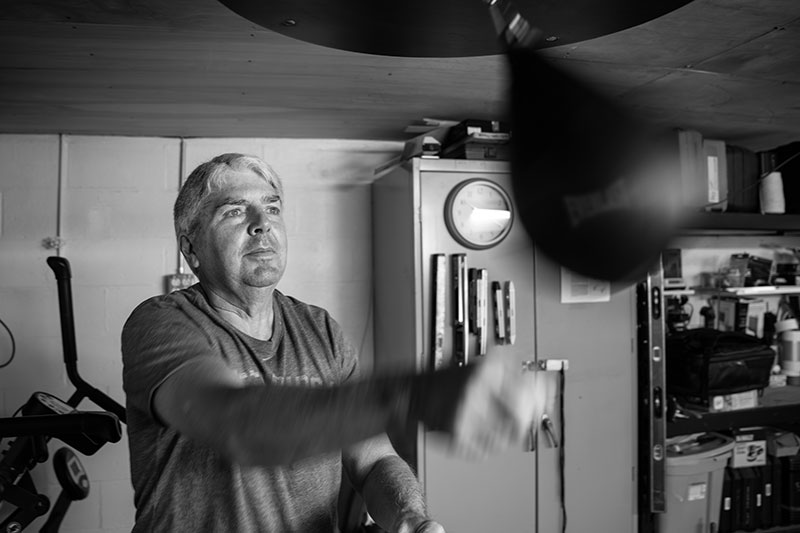
That when you have Parkinson’s, basic foundations to a healthy life take on new importance. At 71, I wake up each morning to begin an exercise routine that includes a boxing workout with a speed bag, time on the treadmill, and a healthy number of push-ups. I feel the rigid impact on my muscles and the tremors that continue to progress as each day passes. The pain often radiates up and down my right arm like a low voltage current, moving down to my right leg, and sometimes there’s a slight migration to my jaw and lower lip. I sort of stutter with words where I used to be more proficient.
How important is it to find new treatments for Parkinson’s?
We’re optimistic about innovative treatments and the potential that a gene therapy cure is on the horizon. In the meantime, I’d advise anyone not to give up on their daily routine; exercise or do whatever is necessary to find a better frame of mind, as I’m confident a cure is coming sooner than later.
Carol, what are your hopes for the future?
I worry about what our future holds, but Paul has a great attitude and doesn’t let Parkinson’s get the best of him. Paul’s my hero!
For more information about Parkinson’s Disease, visit The Michael J. Fox Foundation for Parkinson’s Research, APDA, or Davis Phinney Foundation.
Patient experiences and perspectives are personal and do not reflect clinical outcomes or the effectiveness of any investigational therapy.